Overview
Gecko Traxx tyres are a portable and affordable wheelchair accessory that enable people to get off the beaten track, allowing them to explore the beach and other off-road terrain that standard wheelchairs previously had no access to.
Branching out and launching their own customisable wheelchair line, they enlisted our help to improve the user experience of the scripting (measuring) process of a person before the custom wheelchair is built.
Our goal was to have a better understanding of both the customer's and scripter's experience and journey, and deliver an end to end solution, including branding and website accessibility.Problem Statement
Wheelchair users feel uncertain during the scripting (measuring) process and want better control and transparency through their journey of getting a custom wheelchair. Current technology and practices do not cater for this experience.
Deep Dive
Originally the client had identified that both users and scripters felt uncomfortable scripting for a wheelchair, and wanted to make this easier by using an online medium. However, we wanted to get a broader scope of both the industry and users hence we conducted interviews and surveys on online shopping experiences and the individual's experience acquiring a wheelchair. Additionally we conducted a SWOT analysis on their competitors, to identify any unique opportunities.
40
Google Surveys
3
User Interviews
&
Online Research
The Takeaways
We found that wheelchair users are far more concerned with how daunting the process of getting a chair is as a first time user. It’s hard to find succinct and helpful information, and users felt left out and powerless through the experience. This included things like waiting on therapists, waiting on funding approvals, and how to choose a wheelchair, etc.
Our team also interviewed Occupational Therapists (scripters) on what they currently experience and what thoughts they have on how the system could be improved. Findings showed good therapists are a large part of reducing measurement errors and fighting for sufficient funding. They voiced that collaborating with the wheelchair user was a key factor during the journey of a wheelchair build but it still needed serious improvement.
KEY INSIGHTS
Who Are Our Users?
Our next step was creating a voice for our users that would help both us and the client empathise and focus on what was important when creating a website. It was vital to identify the pain points, goals and frustrations whilst we designed a solution.
Primary Personas

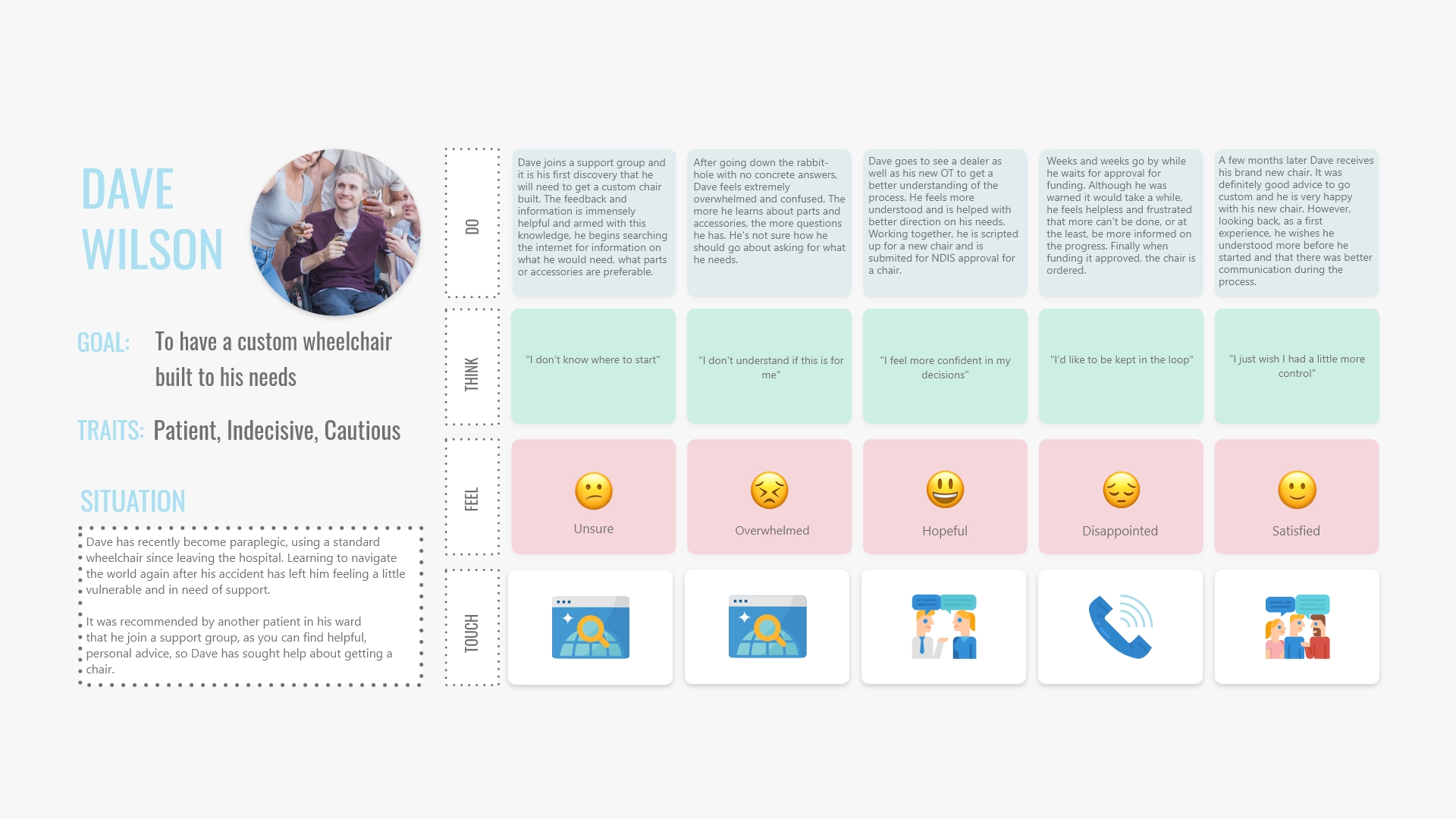

Secondary Persona


Reframing The Problem
Identifying that ‘uncomfortability during scripting’ was no longer a key problem; we realigned our mission to reach more relevant goals. We developed these ‘How Might We’ questions to define the scope of our solutions:
How might we provide information and transparency so that wheelchair users have more confidence and control over their experience?
How might we reduce manual input and streamline processes so that business owners (incl. scripters) have more time to help more people.
Equipped with pen and paper, we ran a collaborative ideation workshop, (using brain writing and crazy 8’s) to generate ideas, picking the strongest to flesh out further.
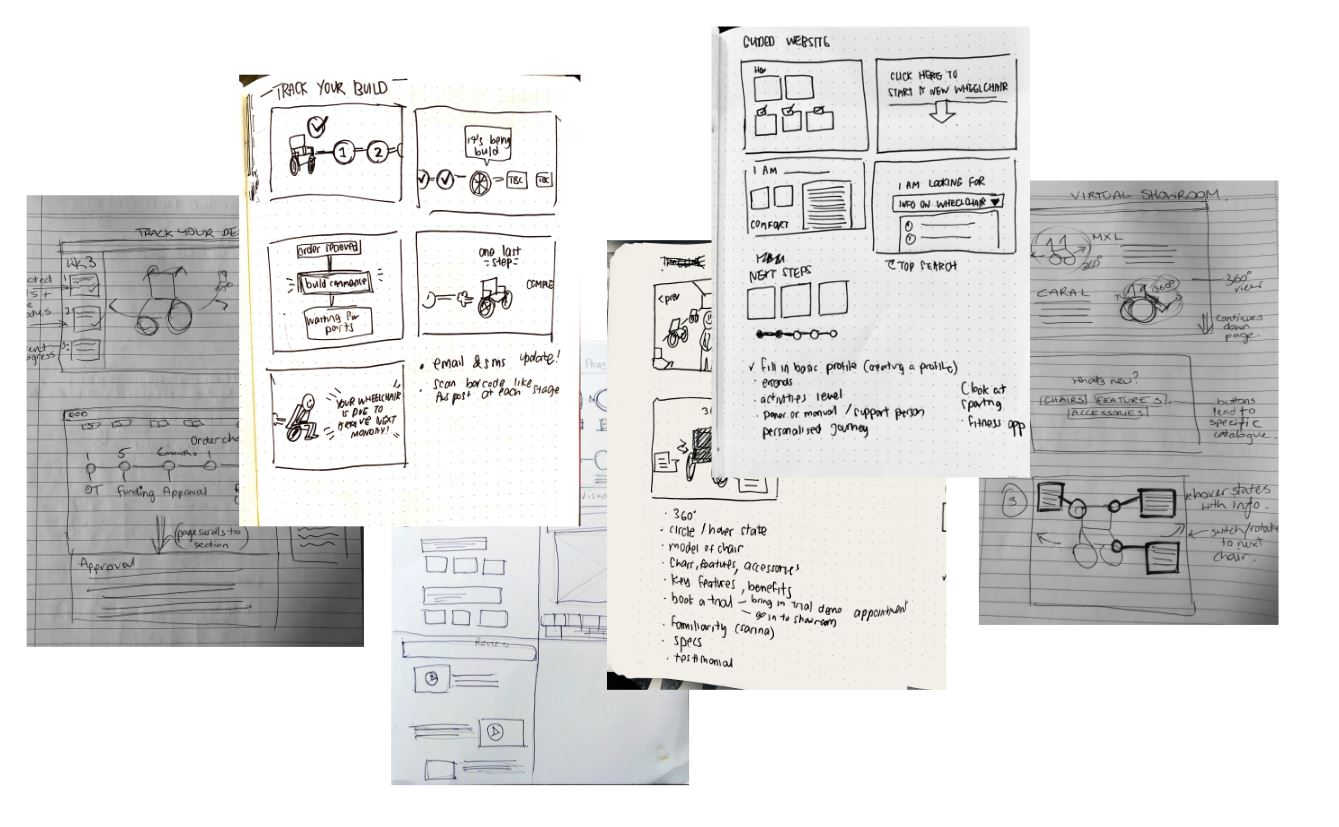
Insight Executed Into Design...

Track Your Build
One of our first solutions was to build a status tracker for the user so they had complete transparency of their wheelchair status. Inclusive of expected part arrival dates, shipping dates and build status, this reduced the amount of excessive communication between wheelchair dealers, the users and the occupational therapists.
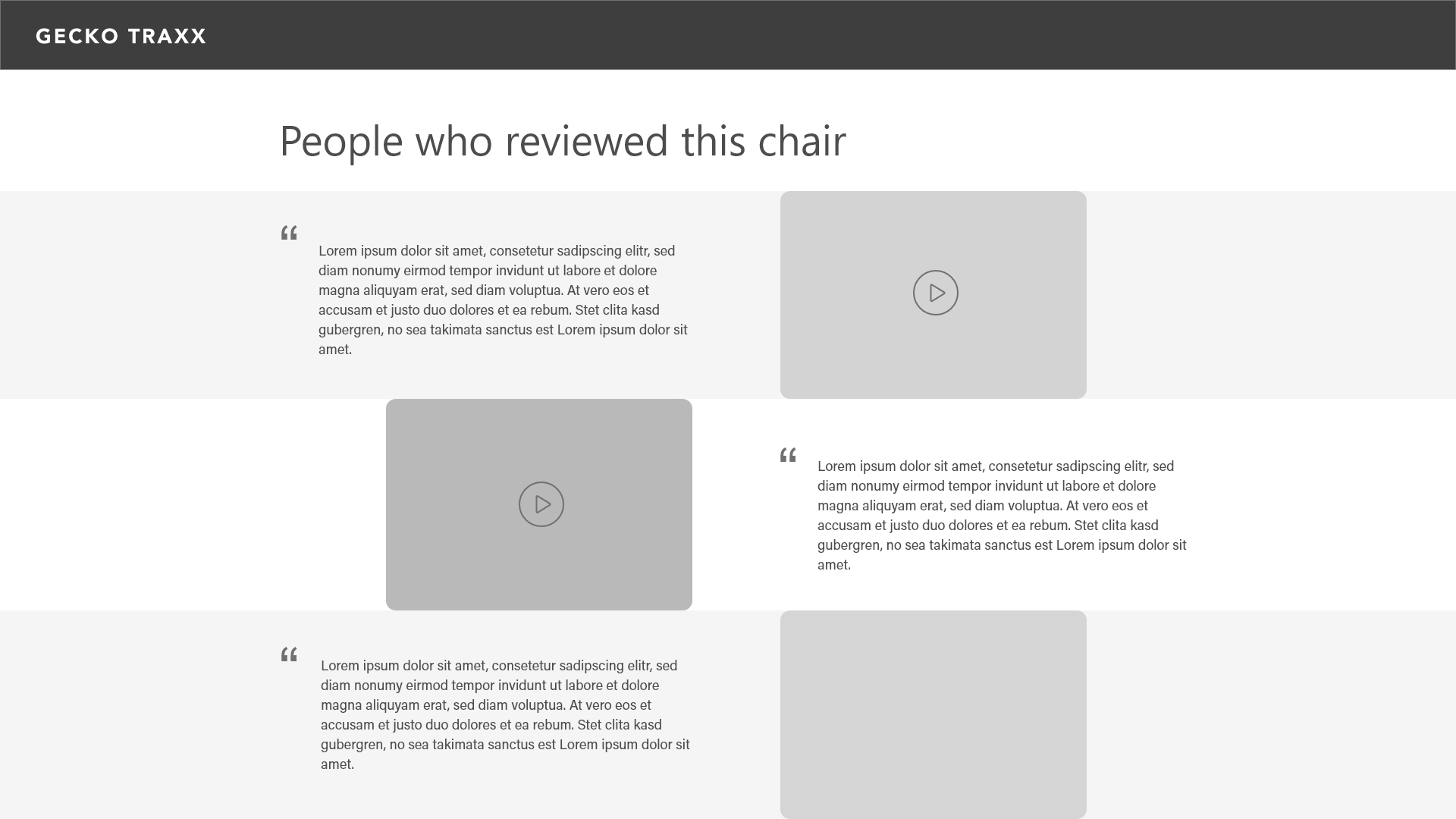
Testimonials
One insight from users was that they trusted in their community when it came to wheelchair feedback. Buying a wheelchair is a personal experience and yet very costly. An unwise choice results in a poorly fit wheelchair in excess of ten thousand dollars. Having testimonials and feedback is essential for first time users to make a confident choice.

Guided Experience
Furthering their confidence during the decision making process, we developed a guided experience that would help recommend suitable wheelchairs. This helped to also fill any informational gaps that may have been missed when dealing with occupational therapists, nurses, wheelchair dealers and the like. Additionally this helped to gather some preliminary information before an initial consultation which allows more time being devoted to individuals specific needs.
Virtual Showroom
It was incredibly important to have a visual representation of the products Gecko Traxx would have. Being able to interact and customise their chair in real time was imperative, as such we designed an interactive showroom, so you can make any wheelchair your own.

Touching Base
Our client meeting was a valuable exchange to ensure that we were all heading in the same direction. It was an important opportunity to highlight that the needs of the customer differed from those mentioned and how our solutions solved those problems.
We received some highly valuable feedback and insight on the client’s business opportunities and how we could incorporate this into our solutions. Together we realigned our goals.
This feedback allowed us to further refine our ideas to ensure that the client’s primary user has a unique and highly personalised guided experience during their journey towards their very own custom wheelchair. One major change we took on was making our scripter/therapist persona Eric, a main persona alongside Dave, hence integrating more valuable business solutions for the client and scripter/therapists into our design.Information Architecture
Using an open card sort we set about creating a complete digital solution.

Branding
When we developed the style guide and system, we took into consideration the client’s feedback regarding the direction they envisioned for the website.
We developed 'Traverse', a brand that speaks directly to the customer, is vibrant and inviting, and inspires exploration.
Mulish is our chosen font for its readability in various sizes, and a twelve grid system to create a responsive and fluid design that is applicable to both desktop and mobile devices.


Accessibility Considerations
My role in the team also included screening our designs in all aspects to make sure we were compliant in web accessibility, as we were mindful that users could be predisposed to additional conditions.
I achieved this by ensuring, amongst other things, that all contrast ratios for colour, icons and copy were met, that content appears and operates in predictable ways, and buttons or choices were indicated clearly to help avoid or correct mistakes.
As such our final solution meets Level AA compliance without sacrificing design or style.
User Testing
Overall our goal was to gain valuable feedback from our users and to better understand how they interact with the Traverse website when on their journey to building a custom wheelchair. We received excellent feedback from both wheelchair users and occupational therapists, which reiterated we had hit the mark with our research insights. Only a handful of minor adjustments were made to terminology or content placement. Some feedback included:

"The whole website feels modern and relevant in the current environment."
5

"Great concept and will make it easier when dealing with my OT and the NDIS."
5

"Flow is simple and easy to use."
5
"Seeing the progress of my build in my account is an awesome feature."
5
Final Design
"We were absolutely blown away by the quality of work and level of insights you achieved!"
Ryan tilley - gecko traxx
Both Bryce and I have really enjoyed working with you and we were absolutely blown away by the quality of work and level of insights you achieved! You guys in particular for me were are standout.
I really loved how you carefully considered the branding, design language as well as the UX/UI components. Clearly you all worked very well together as a team and have some considerable skill sets.
So much of your work and insights will be implemented in the next 5-6 months as we continue to develop out the wheelchair product.
What Did We Learn?
Thorough research was so important as we weren’t just designing for people, but people with specific needs and a product with specific cause. Without empathy and diving into the challenges users faced, plus the depth of information needed for decision making, we couldn’t have created something so highly personal.
Information Architecture was key in building up this design. It was incredibly helpful to have the users test the individual flows through the website, seeing how they moved through the design, linking these flows together then proved to be more of a challenge. If time allowed, we’d have made a full low-fi prototype to test how each of the user flows interconnected earlier in the process, and what was missing, whether it was additional landing page/s or more on-screen guidance.
Out Of Time!
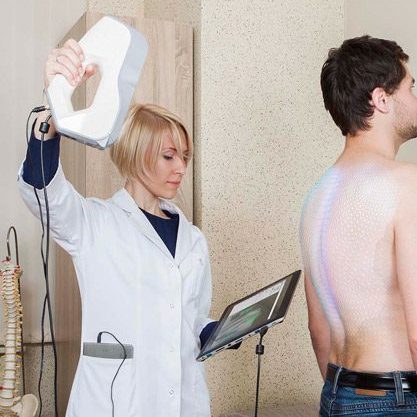
We had big dreams for this project, if we had more time, (or Traverse 2.0!) we would have definitely included a digital solution for scripters. Integrating 3D laser scanning technology, scripters would be able to complete a 3D full body scan in just 3 mins. Within 0.1mm of accuracy the scan converts to CAD software in just 60 mins. Eliminating the need for the standard hour of manual measurement taking, this technology could do so much, but not limited to:
- Further personalising a chair with the specific requirements of the wheelchair user
- Removing human error thus reducing expensive mistakes and reducing time delays
- Removing awkwardness and discomfort, with zero contact.
Noobill